Former Bookkeeper's Assistant Reveals a 7-Day Survival File System That Helps Freelancers Organize Their Money Before the Tax Bill Hits.

INSERT HERO IMAGE HERE: Casual personal photo of Mara Ellis, ideal size 200x300px.
You know the money came in.
You remember the good weeks. The paid invoice. The Stripe notification. The PayPal transfer. The Etsy sale. The client who finally cleared the balance after two polite follow-ups.
For a few minutes, you felt like a real business owner.
Then rent came out. Software renewed. A card payment hit. Groceries happened. A flight was booked. A tax email arrived, and you told yourself, I will deal with that when I have a proper afternoon.
But the proper afternoon never came.
Now your income is split across bank accounts, platforms, screenshots, invoices, client transfers, and half-finished spreadsheets. Your receipts live in your inbox, your downloads folder, your phone camera roll, and maybe one drawer you keep meaning to empty.
You are not even sure what counts as an expense anymore. Is that subscription business? Was that coffee with a client? Did you save the VAT invoice? Did you download the 1099? Did you send the accountant everything they asked for?
And the worst thought keeps tapping you on the shoulder: What if I already spent the tax money?
So you avoid checking. You tell yourself business is busy. You say, I just need to sit down and sort it. But when you open the laptop, the mess looks bigger than your courage.
If you are in the US, it might feel like a 1099 mess or a quarterly estimated tax scramble. If you are in the UK or Ireland, it might feel like Self Assessment stress, an HMRC-style letter, payment on account, or an accountant asking for records. If you are in Europe, it might be VAT invoices, freelancer invoices, receipts, an email from your accountant, or that sinking feeling when the tax authority wants clarity you do not have.
You are not lazy. You are not stupid with money. You are probably booked, tired, and running your business through memory, inbox search, and hope.
Drop everything you are doing now and listen to every word I’m about to say.
Because I’m about to share with you a simple survival file system that changed everything for me.
This system has been around quietly in back offices for decades, passed from bookkeepers to assistants who had to clean up the mess before deadlines.
Not the shiny part of finance. Not the podcast advice. Not the motivational posts about abundance and automation.
I mean the real back-office work: opening envelopes, matching bank lines, finding missing invoices, sorting receipts, checking platform payouts, and turning panic into a file an accountant can actually work with.
Hi, my name is Mara Ellis.
First thing you should know about me is that I’m NOT a tax adviser, accountant, or financial guru. I’m a former bookkeeper's assistant and virtual finance assistant who has seen smart freelancers panic over messy money for years.

INSERT PERSONA IMAGE HERE: A second personal photo of Mara Ellis, ideal size 200x300px.
How I Learned That Freelancers Do Not Have a Tax Problem First
I did not begin my working life as the sort of person who could calmly label folders and talk about accountant handoff files.
I came into freelance admin and bookkeeping support after a career change. At first, I thought the work would be simple. Help clients organize receipts. Chase invoices. Prepare records. Make things tidy enough for the accountant.
Then January came.
And April. And every other tax deadline that makes self-employed people suddenly remember that money has a second life after it lands in the bank.
I started seeing the same scene over and over. Designers. Copywriters. Coaches. Consultants. Etsy sellers. Shopify sellers. Photographers. Social media managers. People who looked successful online. People with full calendars and busy inboxes.
But behind the scenes, many of them were financially scattered.
They were not broke in the way people imagine. Money had come in. Sometimes quite a lot of it. But nobody had separated what was income, what had already left, what belonged to tax, and what needed proof.
That is the quiet part of freelance life. You can be busy and still financially disorganized. You can have clients and still feel sick when your accountant asks for records. You can be “booked” and still feel broke at tax time.
I saw the shame before I understood the system.
People would laugh too loudly when they handed over messy records. They would say things like, “Please don’t judge me,” before opening a folder. They would apologize for screenshots. They would confess that receipts were in a shoebox, a glove compartment, an email folder, and a tote bag they had not unpacked since a market weekend.
I recognized it because I had done my own version of it.
Early in my freelance admin career, I treated client payments like spendable money. If a payment landed, I relaxed. I paid personal bills from the same account. I bought tools and courses without marking them properly. I told myself I would sort the tax bit later.
Later has a way of becoming deadline week.
There was one afternoon in late January that changed how I looked at all of it.
I was at a shared co-working office in Manchester, helping a freelance designer prepare records for an accountant. The room was warm, too bright, and full of people pretending to be calm while secretly doing admin they had delayed for months.
The designer arrived carrying a grocery bag.
Not a folder. Not a laptop sleeve. A grocery bag.
Inside were crumpled receipts, folded invoices, printouts, sticky notes, screenshots from PayPal and Stripe, a notebook with half-finished totals, and an unopened tax letter that had been sitting at home because, in her words, “I just couldn’t look at it.”
Her deadline was close. The accountant had already asked twice for clearer records. Her bank transactions were mixed. Personal groceries sat beside client lunch receipts. Software subscriptions were on one card. Platform fees were hidden inside payouts. She kept saying, “I know I earned enough. I just don’t know where it went.”
That sentence stayed with me.
Across the table sat Ruth Bennett.
Ruth was 58 then, a retired small-business bookkeeper who had spent more than 25 years preparing messy records for sole traders, freelancers, market sellers, contractors, and small creative studios.
She did not gasp. She did not shame anyone. She just looked at the bag, moved her tea to the side, and said, “Clear the table.”
Then she said the line I still repeat to freelancers now:
“You do not need perfect records to start. You need a survival file.”
At that point, I had seen people try almost everything.
- Bookkeeping apps that looked helpful on the sales page but felt too complex by day four.
- Spreadsheet templates that started neat in January and became a guilt document by March.
- Random savings percentages that felt responsible until nobody knew whether the amount was enough.
- Hiring an accountant in panic mode when the records were already scattered and the emotional pressure was high.
- Asking AI for tax help but still not knowing what income sources, receipts, invoices, or missing records needed to be gathered.
- Ignoring tax emails until the deadline felt close enough to cause a physical reaction.
Those methods failed for the same reason.
They expected a panicked freelancer to behave like an organized finance department.
Ruth did not.
After the designer left to make a call, Ruth pulled a blank sheet of paper toward me and drew three boxes.
“Forget the software for a minute,” she said. “Software is useless if the person does not know what they are looking for. Every payment has to pass through three checks. What came in? What already left? What must be protected? That is the work.”
I remember thinking it sounded too simple.
Honestly, I did not believe it at first because it was stupidly simple.
No clever dashboard. No fancy automation. No complicated accountancy language. Just three checks and a survival file.
But Ruth had a way of making simple things feel non-negotiable.
We started with what came in. Every client payment. Every platform payout. Stripe. PayPal. Bank transfers. Etsy. Shopify. Upwork. Fiverr. Any place money had entered the business, even if it was messy.
Then we moved to what already left. Tools. Subscriptions. Fees. Shipping. Materials. Travel. Client expenses. Mixed transactions. Anything that needed proof or review.
Then we created the protected section. Tax set-aside notes. Missing records. Questions for the accountant. A folder for receipts. A handoff list.
The first day felt slow.
The second day felt worse.
That is something people do not say enough. When you first face money you have been avoiding, clarity does not arrive like a sunrise. It arrives like dust in the air. You see more mess before you see relief.
By the third day, though, something shifted.
We could see where most of the money had come from. Not perfectly. But enough to stop guessing.
By the fifth day, the designer had two piles that changed everything: known records and missing records.
That sounds small until you have been frozen by the belief that everything is missing.
I watched her shoulders drop.
She put both hands flat on the table, looked at the folders, and said, “So it is not all gone. It is just scattered.”
That was the breakthrough.
Not joy. Not excitement. Something quieter. A kind of breath returning to the room.
By day seven, the accountant had one survival file. Income. Expenses. Receipts. Missing items. Tax set-aside notes. Questions. Handoff sections.
The accountant opened it, looked through the labels, and said, “This is the first time I can actually see what happened. It is not perfect, but it is workable. That is what matters.”
I have never forgotten that.
Because perfection was never the rescue.
Workable was the rescue.
After that, I started using Ruth’s three-check approach with other freelancers and clients who were facing the same kind of tax-season panic.
I need to be clear here: I am not going to invent miracle stories or pretend I have verified public testimonials from thousands of buyers. What I can share are composite scenarios based on the common freelancer situations I saw again and again.
One designer had Stripe and PayPal income spread across client retainers, one-off projects, and late payments. Once the income sweep was done, the fear stopped being vague. She could finally see which payments belonged to which months.
One Etsy seller had receipt chaos. Shipping labels, packaging costs, marketplace fees, materials, and random screenshots were everywhere. The survival file did not make her books perfect, but it gave her a clean place to gather proof instead of searching from scratch every time.
One consultant had mixed personal and business expenses across the same card. She had been avoiding the account because she felt embarrassed. Once the mixed transactions were flagged instead of hidden, she had a list of accountant questions rather than a private shame spiral.
That is when I understood the real problem.
Freelancers do not have a tax problem first. They have a gross-income illusion problem.
The money comes in and feels like take-home pay. Then expenses, fees, subscriptions, personal spending, and tax all live inside the same number.
And when the bill arrives, the freelancer feels exposed.
But the answer is not to become an accountant overnight.
The answer is to build the survival file before panic makes every number feel like a threat.
So I Put the System Into One Simple Guide
After a while, I was getting too many messages and questions to explain the same process one person at a time.
People wanted to know what to gather first. What to ignore for now. How to separate income from expenses. How to make a missing-records list without spiraling. How to hand something useful to an accountant even if the records were not perfect.
So I put everything — the full 7-day survival file system, the income sweep, the expense sort, the receipt rescue, the missing-records list, the tax set-aside planner, and the accountant handoff steps — inside one simple guide.
Introducing...
Before the Tax Bill Hits: The 7-Day Tax Shock Reset Protocol
A calm, practical PDF guide for freelancers who need to turn scattered income, expenses, receipts, missing records, and tax set-aside notes into one workable survival file.
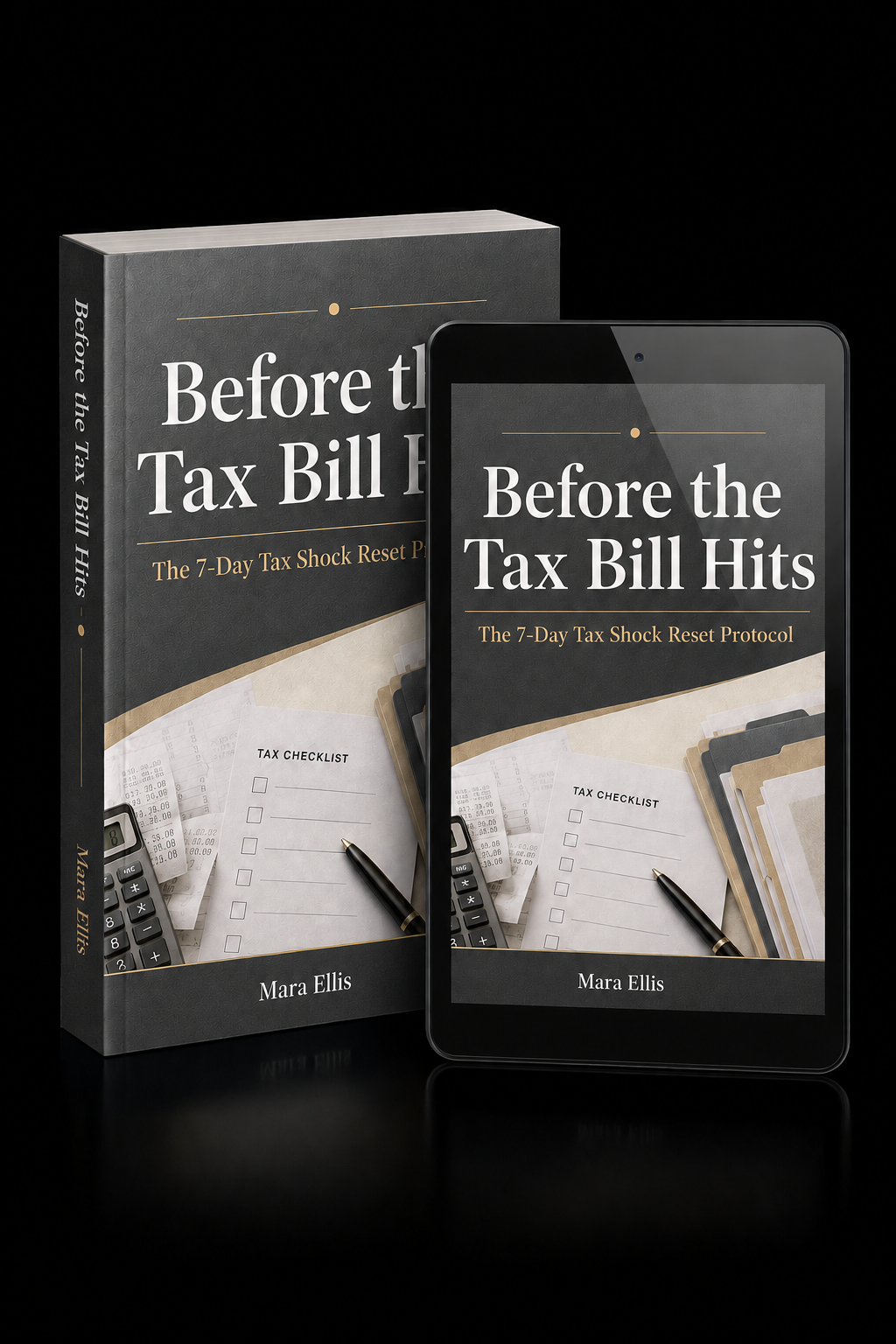
INSERT PRODUCT MOCKUP IMAGE HERE: Professional 3D PDF/book mockup, ideal size 768x1152px.
What Is Inside the Guide
Inside this e-guide, you’ll discover:
- The Gross-Income Illusion Check — Pg. 3
Why freelance income can feel bigger than it really is, and how to stop treating every payment like take-home money. - The Payment Source Sweep — Pg. 6
A simple way to gather Stripe, PayPal, Etsy, Shopify, Upwork, Fiverr, client transfers, and platform income into one view. - The Expense and Receipt Rescue Method — Pg. 10
How to start sorting tools, subscriptions, fees, mixed expenses, and receipt chaos without needing perfect books first. - The Missing Records Survival List — Pg. 15
The calm list that separates what you have from what you still need, so missing items stop feeling like a fog. - The Tax Set-Aside Planner — Pg. 20
A practical way to think about protected money before the next payment disappears into normal life. - The Accountant Handoff Folder — Pg. 25
How to package income, expenses, receipts, questions, and missing items into something your accountant can actually read. - The 30-Minute Monthly Money Review — Pg. 30
A repeatable check-in so the next deadline does not become another late-night panic session.
And the best part? You don’t need to become an accountant or rebuild perfect books from scratch or spend thousands before you start. It’s the same simple back-office sorting system I used to help freelancers turn scattered records into something workable before deadline pressure took over.
Just So You Know... Putting this Guide in an Easy-To-Read Format Cost Me Over $1,350 / £1,050 / €1,250.
I wanted this to feel simple enough to use while you are tired, anxious, and already behind.
That meant I had to invest in more than just writing pages.
- Research into freelancer tax-season pain points across the US, UK, Ireland, and Europe.
- Copy editing so the guide stayed calm, clear, and non-judgmental.
- Worksheet design for the income sweep, receipt rescue, and missing-records list.
- Page layout so the system is easy to follow across the full 7 days.
- Website and sales page setup so early-access buyers can understand exactly what they are getting.
I’m not going to charge you $1,350 / £1,050 / €1,250.
I won’t even charge you half of that.
Not even a quarter of that.
In fact, you won’t even pay the original anchor price today.
$29 / £30 / €37$8.99 / £8.89 / €9.45
That is the early-access price for Before the Tax Bill Hits: The 7-Day Tax Shock Reset Protocol.
This Discounted Offer is ONLY For the First 100 early-access buyers, so hurry!
Temporary link in use. Replace this with your final checkout, payment, or waitlist URL before publishing.
WAIT! I Have a FREE Gift For You...
If you’re among the First 100 early-access buyers... you’ll get these practical BONUSES alongside your package. (TODAY ONLY)
INSERT BONUS 1 MOCKUP IMAGE HERE
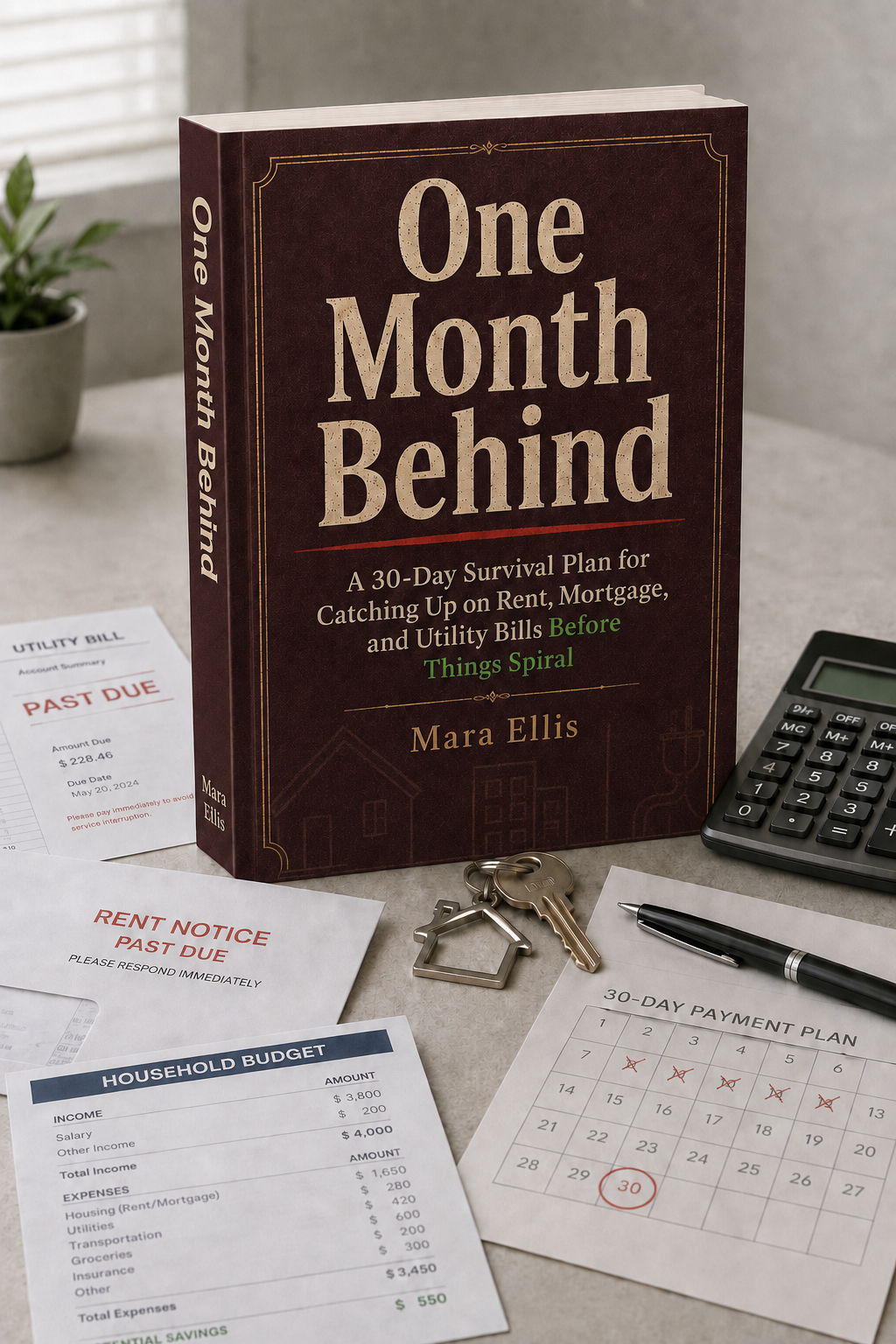
Bonus 1: The Freelancer Tax Panic Checklist
A One Month Behind is a practical 30-day survival guide for catching up on overdue rent, mortgage, and utility bills before the pressure spirals.
INSERT BONUS 2 MOCKUP IMAGE HERE
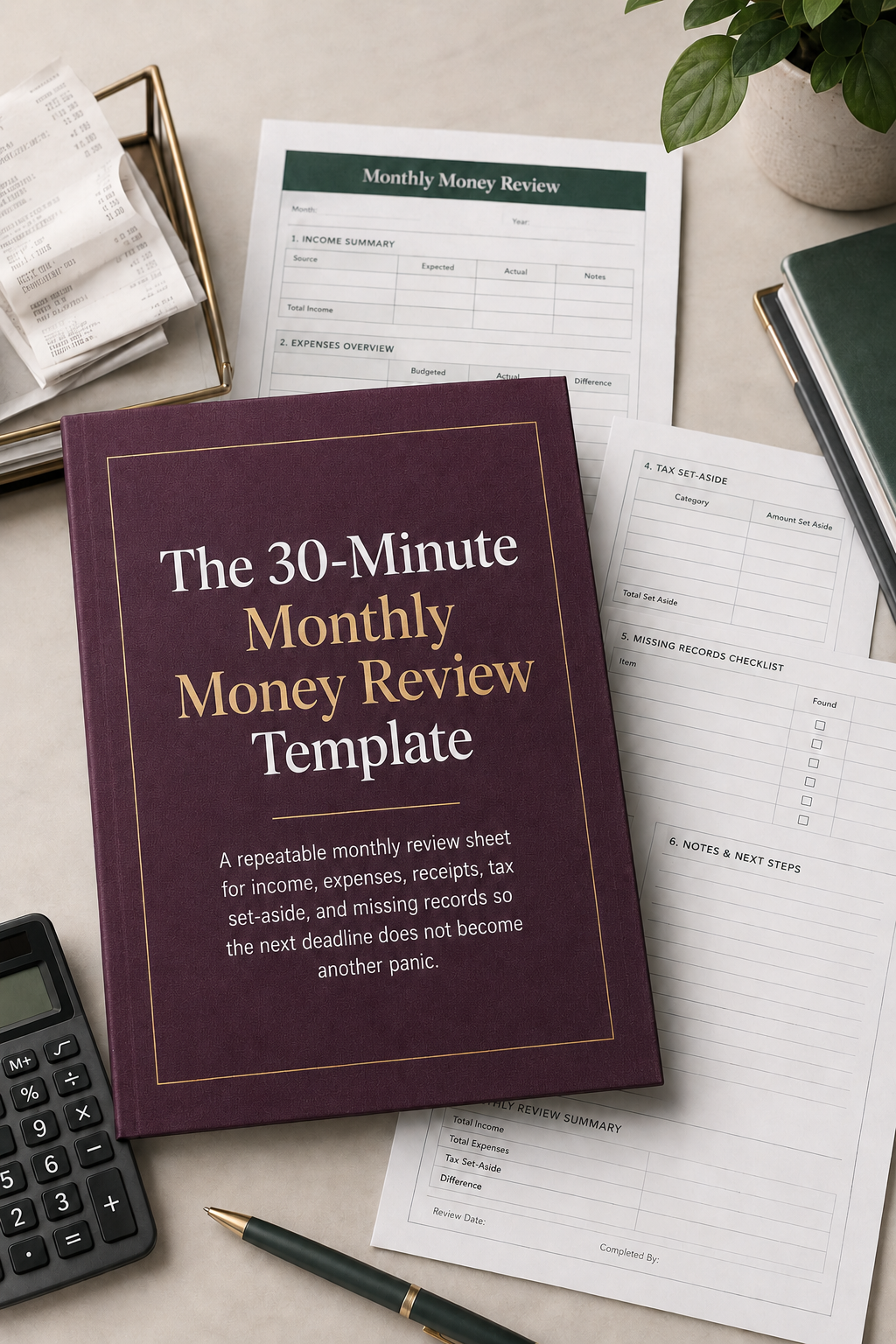
Bonus 2: The 30-Minute Monthly Money Review Template
A repeatable monthly review sheet for income, expenses, receipts, tax set-aside, and missing records so the next deadline does not become another panic.
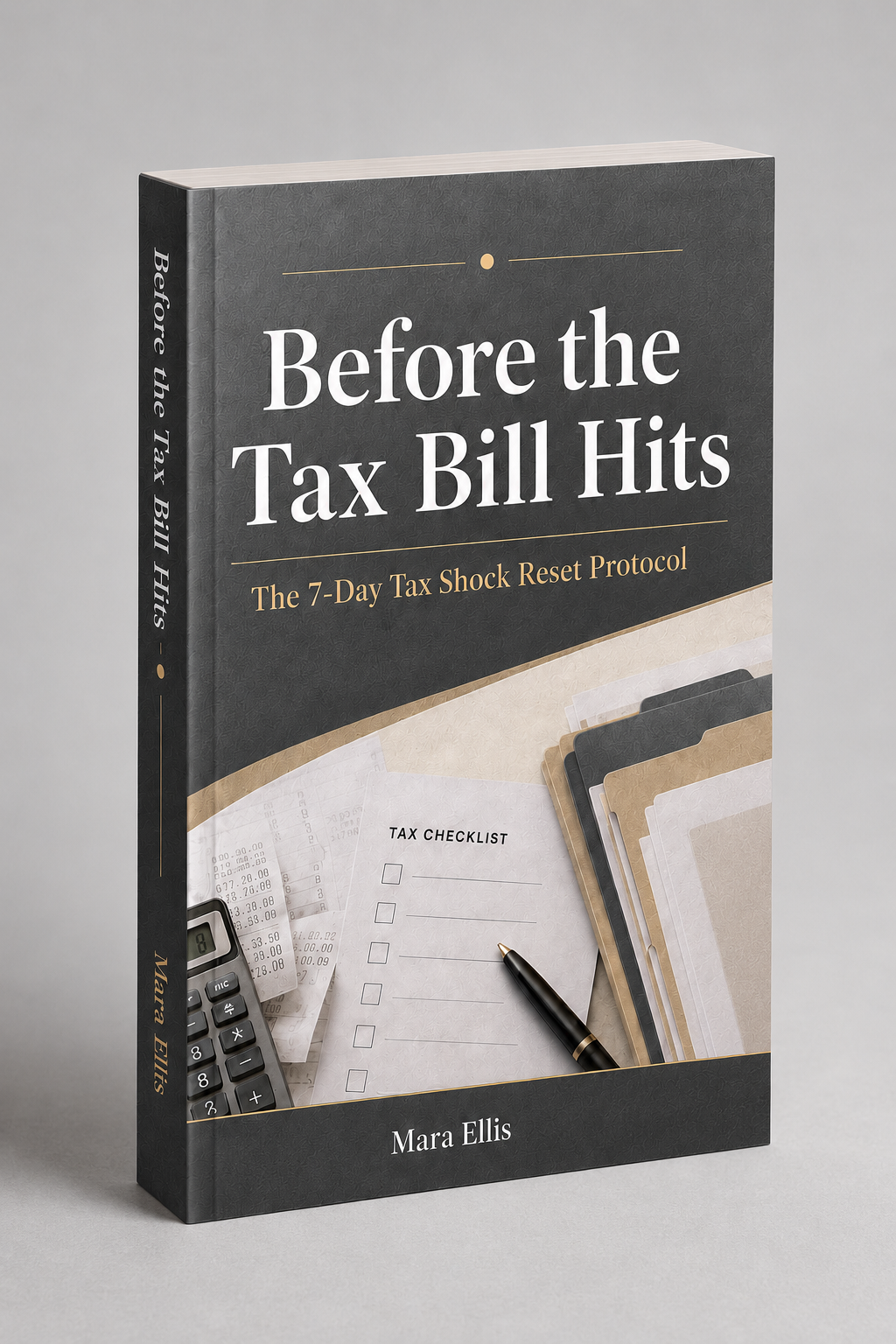
INSERT BUNDLE IMAGE HERE: Main guide + both bonuses shown together.
Early Access Interest
Early access spaces are limited. Once the first 100 spots are filled, this launch price may close.
Bear in mind, other freelancers are trying to solve this before tax season too.
Click Here To Get Before the Tax Bill Hits NOW!Still Feeling Unsure?
Still feeling unsure? I totally understand. Which is why I’m making you a bold, risk-free promise:
Use the system for 14 days.
If it does not help you create a clearer survival file for income, expenses, receipts, missing records, and tax set-aside notes, you can request a full refund.
No awkward argument. No guilt. No pretending this is something it is not.
This guide does not promise lower taxes, fewer penalties, legal outcomes, or accounting results. It promises a calmer way to organize what you have, flag what is missing, and prepare a more workable handoff before the tax bill becomes an emergency.
Click Here To Get Before the Tax Bill Hits NOW!More Reader Notes From Freelancers
Chloe Bennett
London, United Kingdom 🇬🇧
3 days ago
I kept calling it “sorting my accounts” but I never knew what that actually meant. Income, expenses, receipts, tax set-aside, and accountant handoff is the first structure that felt doable.
★★★★★
Noah Parker
Los Angeles, United States 🇺🇸
5 days ago
The quarterly tax scramble gets me every time. I liked the idea of protecting money before it disappears into normal bills and subscriptions.
★★★★★
Isabella Verdi
Madrid, Spain 🇪🇸
1 week ago
I had facturas, card payments, and client transfers mixed together. The survival file idea felt less intimidating than trying to rebuild perfect books from scratch.
★★★★★
Mila de Jong
Amsterdam, Netherlands 🇳🇱
1 week ago
As a ZZP’er, I know I should be better with records, but the problem is starting. A missing-items list sounds simple, but that is exactly why it works.
★★★★★
Camille Renault
Paris, France 🇫🇷
2 weeks ago
My auto-entrepreneur admin was scattered across emails, bank transfers, and old downloads. I needed a calm system, not someone making me feel worse.
★★★★★
Share Your Experience
Two Choices
Option 1: Take action. Get Before the Tax Bill Hits: The 7-Day Tax Shock Reset Protocol. And regain clarity before tax season turns into panic.
OR
Option 2: Close this page and keep guessing what came in, what already left, and what should have been protected. Maybe this is the reminder your future self needed. Who knows?
The clock is ticking.
Replace this temporary URL with your final checkout, payment, or waitlist link before publishing.
Reader Notes From Freelancers
Sample reader scenarios: These are realistic composite scenarios for launch-page illustration, not verified buyer testimonials.
Emily Hart
Austin, United States 🇺🇸
4 days ago
I had a full 1099 mess sitting across PayPal, Stripe, and two client accounts. The phrase “gross is not take-home” hit me hard. I needed one folder before I needed another app.
★★★★★
James Sutherland
Manchester, United Kingdom 🇬🇧
1 week ago
Self Assessment stress is exactly the phrase. I always thought I needed a perfect spreadsheet. What I actually needed was an accountant-ready folder and a missing-records list.
★★★★★
Aoife Murphy
Dublin, Ireland 🇮🇪
1 week ago
I sell through Shopify and do freelance design. My receipts were in my inbox, my camera roll, and a shoebox. Seeing known records and missing records as two separate things made it feel less impossible.
★★★★★
Lena Kruger
Berlin, Germany 🇩🇪
2 weeks ago
The VAT headache and accountant email avoidance felt very familiar. I liked that this did not pretend to be tax advice. It is a sorting system, and that is what I needed first.
★★★★★
Marco Rossi
Milan, Italy 🇮🇹
2 weeks ago
I kept saying I would sort my Partita IVA records later. Later became panic. The folder labels made sense: income, expenses, receipts, tax set-aside, accountant handoff.
★★★★★
Share Your Experience